How to Dump Info Without Info Dumping

As much as we all know to never ever use info dumps, it doesn’t always make sense to convey something through dialogue or a flashback, and sometimes you need the reader to know the information right away – you don’t have time to trickle it through several chapters.

So for those times when you truly need to do some telling instead of showing, here are some tricks to slip it in unnoticed.

Landscape

Establish a Scene

Before moving into an info dump, always establish a scene. This means that the very first information conveyed needs to establish the basics: who, what, when, and where. Let the reader know what your character is up to and they will have something to visualize. Visualizing something (anything!), helps the reader stay engrossed in the scene.

The Scene has to Matter

The scene you establish must be in some way integral to telling the story. The scene’s purpose cannot be simply to dump information on the reader. Something interesting must happen in the moment of the scene, not only in the info dump. For more about this, check out: How to Spot a Bad Scene or Chapter.

Stick to the Facts

Does the reader really need to know that Hank was late to Jane’s wedding, the Halloween party, and Christmas Eve? Or do they just need to know that Hank is always late? If it’s the fact that the reader needs (Hank is always late), and not the story (Hank was late to Jane’s wedding, etc.), then stick to the one sentence fact, don’t tell a two paragraph story.

Keep it Short

Think critically about what the reader really needs to know to understand the story. Every time you want to tell something, ask yourself: If I didn’t tell this, would it reduce the reader’s comprehension of the story? If the answer is no, leave it out. Don’t slip into the trap of believing that more information always enhances the story. If the characters, plot, and world make sense without the information, the readers don’t need it.

Couch it in Action

Couching an info dump in action allows the scene to maintain momentum rather than grinding to a screeching halt. A lack of momentum is what makes info dumps so glaringly annoying in the first place. So instead of Jane sitting at the window contemplating how Hank is always late, she can think about it while pacing around her apartment. The key word is “while.” She needs to think about it while pacing, not before or after.

Let’s look at a scene that does not follow these rules:

Hank was never there when Jane needed him. She would sit and wait for hours and he’d never show up. He was late to her wedding even though she sent a cab to his door at the right time to pick him up. He was late to the Halloween party when they were dressing up together as M&Ms. They worked for hours on those costumes and almost missed the party. And then there was Christmas Eve. Hank was Jane’s secret Santa and he was so late that she had to open her gift after the party had already ended. And he never even cared. He just shrugged it off like it was no big deal. But Jane cared. She cared a lot.

Jane laid down and went to bed. Maybe someday Hank would change and be the man that she needed.

Why it Doesn’t Work

Let’s break down why the above scene doesn’t work by examining each of the rules.

Establish a Scene: Where is Jane? What is she doing? Why is she thinking about Hank always being late? We don’t know any of that until after the huge paragraph of info dump.

The Scene has to Matter: Is this scene really necessary to the book? Nothing happens except Jane pouting about Hank’s lateness and then she goes to bed. With no conflict or relevance to the rest of the novel, this scene is clearly not needed.

Stick to the Facts: Do we really need to know that they were going to dress up as M&Ms? Or that she sent a cab to his house on her wedding day? My guess is no. What we really need to know is that Hank is always late.

Keep it Short: Is everything in this paragraph necessary to grasp the concept that Hank is often late? Clearly not. And remember, we don’t want to fall into the trap of believing that all details “enhance” the story. They very often do not.

Couch it in Action: There’s no action in this scene until the last sentence, so obviously no couching is happening here.

So how can we rewrite this scene?

Jane paced back and forth in front of her apartment door. Hank was late. She wrung the end of her shirt in her hands. He was always late. She took a deep breath and paced harder. Maybe he didn’t want their relationship to work out as much as she did.

There was a knock at the door. She yanked it open and Hank stood there, a bright smile on his face. Two hours late. She sighed.

Why is this better?

Let’s break it down:

Establish a Scene: This is done right away. We know where Jane is and what she’s doing.

The Scene has to Matter: Hank is on his way over so presumably something is going to develop with the plot.

Stick to the Facts: Rather than long stories, there were brief sentences about Hank’s lateness.

Keep it Simple: The facts weren’t embellished with a bunch of extras. It was simple and quick.

Couch it in Action: Jane is active, before, during, and after the information is conveyed, so the reader is never yanked from the scene.

And here’s the kicker: Writing a scene like this is usually easier, faster, and actually conveys more emotional information than an ordinary info dump. If you use these techniques, your writing will improve, guaranteed!

If you liked this article, please share it with the buttons below!

If you need help with your novel, synopsis, or query, please check out my editing services and get in touch!

If you want a free first page edit and critique, check out First Page Friday.

087

Bestselling Middle Grade Fiction Part 1: Genres & Topics

This is part one in my middle grade fiction series. Future installments will include information and statistics on word count, point of view, tense, and debut vs. established authors.

To receive notifications when the rest of the series is posted (as well as my other blog posts), submit your email address in the side bar to the left.

Methodology

I compiled the statistics below based on the New York Times Bestsellers List for middle grade novels. I included all novels that made the top ten list between April and September 2013 (a six month period).

I did not include media tie-ins (Lego, Disney, Star Wars, etc.) as these books have their own momentum that may have nothing to do with the subject matter, the quality of the book, etc.

I did not include nonfiction.

I did not include books that were sequels because they are not standing alone on their own merit.

I did include books that are the first in a series even if a subsequent book had already been published before the first book made it on the bestsellers list.

Purpose of Research

While there are a lot of factors that go into a book’s success, I wanted to break down the elements of the most popular middle grade books in the current market.

My primary motivation in doing this is to answer some of the most frequently asked questions by aspiring middle grade authors, such as appropriate topics, genres, word counts, point of view, tense, etc.

Bestselling Middle Grade Genres & Topics

Realistic vs. Fantastical

Rather than split hairs about individual genres, I decided to breakdown the bestselling books based on whether or not they are realistic or fantastical.

I am defining realistic as anything that could possibly happen in real life and fantastical as anything that cannot happen in real life. Talking animals are included under fantastical.

Of the 22 books on the list, 10 were realistic and 12 were fantastical.

Screen Shot 2013-09-26 at 2.54.04 PM

Realistic Fiction Topics

In realistic fiction, the most popular topic/genre was Historical. Keep in mind that teachers are one of the biggest purchases of middle grade books and are more likely to buy the educational historical novels over a humor or mystery novel.

Humor and Mystery were the primary topics/themes of two books each. There were also two books with a disabled main character. I included “disabled main character” as a topic when it was the driving force behind the novel rather than incidental.

Only one sports book made the list. It may be important to note that this book was written by a professional soccer player, which may or may not have driven sales.

Screen Shot 2013-09-30 at 9.59.48 AM

Fantastical Fiction Topics

In fantastical fiction, the most popular genre/topic was books set in a fantasy world. I defined “Fantasy World” as a book that takes place entirely in a fantasy world and in which the real world does not exist at all. There were five of these on the bestsellers list, making it by far the most popular form of fantastical fiction.

“Portal Fantasy” is a novel that starts in the real world and features a child who is transported into a fantasy world. There were two of these.

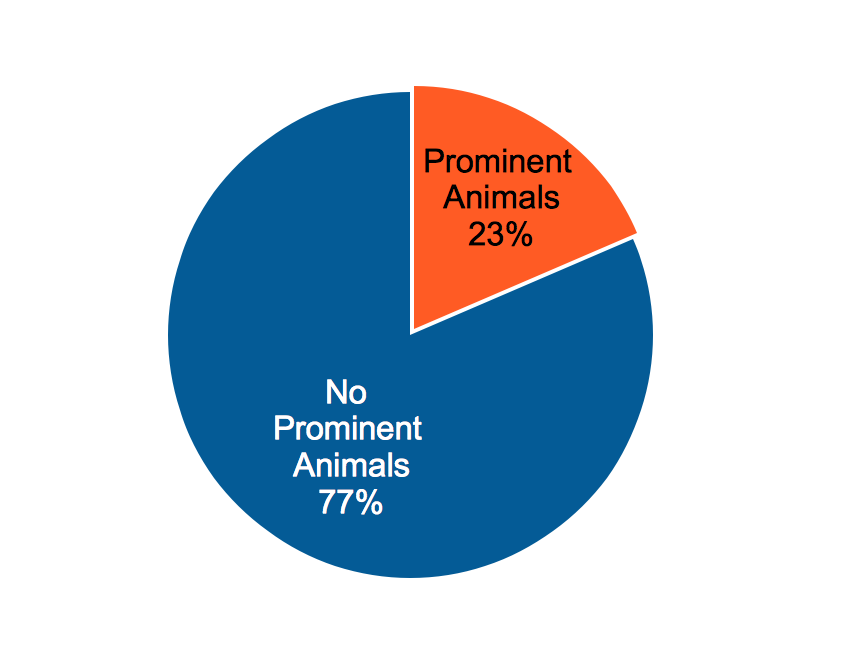
I defined “personified animals” as animals that are the main character or who narrate the story. Aside from the personified animals, there were no fantastical elements in these story. The setting and plot would have been realistic had the main character been a human. There were two of these.

There was only one Dystopian novel and it featured dogs as the main characters (this was not included under “personified animals” due to other fantasy elements). Since the only bestselling Dystopian featured dogs, it is not clear whether Dystopian with humans would be successful in middle grade.

One book featured fantasy elements in the real world, meaning that the characters were not transported to another world but simply found magic here on earth.

One book was Paranormal, but the author was extremely well established before its publication, making it difficult to say whether paranormal would be a successful genre for a debut author.

Screen Shot 2013-09-30 at 10.16.12 AM

Animals

Animals made quite a few appearances in middle grade books. Three books featured animals as a significant element of the plot, and two featured animals as the main characters, for a total of five books featuring animals in a significant role.

Screen Shot 2013-09-30 at 10.35.04 AM

Absent Genres

In addition to exploring the popular genres, it’s important to note the genres that made no appearance at all. There was not a single Science Fiction novel on the list. There also wasn’t any Horror, though some of the fantasy books had some minor horror elements.

In realistic fiction, there weren’t any stories about normal kids facing major life issues (bullying, divorce, etc.). There were two humor books that dealt with popularity, but the only realistic fiction with a serious tone were the two books about disabled main characters.

There are two ways to look at these absent genres/topics. They could either be areas of opportunity or areas with poor sales. It’s difficult to determine without further research, but I tend to believe that there is always a place for a well-written novel of any genre.

If you liked this post, please share it using the buttons below, follow my blog, or check back for the rest of the series.

Want a FREE critique of the first 500 words of your novel? Check out First Page Friday.

Need a freelance novel editor? Check out my editing services.

017

First Page Friday #1: Science Fiction

First Page Friday

Hooray for the first ever First Page Friday! If you missed my introductory post, here’s some info:

First Page Friday is a new section on The Writeditor’s blog. Every Friday I will provide an in-depth edit and critique of the first 500 words of an unpublished novel.

I am still working on the best way to present the edit and critique so your feedback is welcome. Please let me know which sections you like, which you hate, and if you have any ideas for ways to make this segment more useful.

First Page Friday Edit & Critique

Critique Key

Original Text is in italics.

Red is text I recommend removing.

Green is text I recommend adding.

Blue are my comments.

SciFi First 500 – By Charles Naylor

As the blue plasma tracer ignited the air scant inches from Buggin’s face and cut into the wall behind him, he tried to remember whether or not he left the oven on. << Avoid starting sentences with “as.” It’s not nearly as active or engaging as a simple rewrite: The blue plasma tracer ignited the air scant inches from Buggin’s face, cutting into the wall behind him, as he tried to remember whether or not he left the oven on. He remembered waking, and he remembered the rum, and he remembered Tak practically beating down his door as he burnt an omelet. But did he turn the oven off before Tak poured him into a pair of pants and hustled him outside? << I like how you’ve incorporated back story in a way that isn’t obvious or info dumping. 

He tried to roll left, but the fifth of rum he killed this morning made it more of a lurch-then-skid as the big bastard << Who is “the big bastard”? jerked his Cryotek Series II Plasma Cutter in the opposite direction, cutting a foot-wide line through the wall behind him. Buggin wrinkled his nose, he always hated the smell of melted concrete and rebar, and << These are two different concepts that don’t need to be connected as one sentence.>>He closed his left eye while bracing his heavy laser rifle against his right shoulder. He switched on his gun’s scope, disabling the transparency effect on his eyepatch << Since an eyepatch was not previously mentioned, I had to read this a couple of times to assess what I think you are saying – that he wears the eyepatch all the time and it darkens while he’s using the gun’s scope. For the sake of not jarring the reader, I think this could be made clearer. and piping in the scope’s wireless feed. He didn’t need the scope’s infrared sensor to notice the tip of the Plasma Cutter igniting again.

“Shit!” Buggin managed to rolled left just as another blue line ignited the area he had previously occupied, the busted concrete scattered on the ground that dug at his back working together with his near-death experience to briefly pierce the cloud of inebriation that suffused his brain.<< This sentence is working too hard, especially the second half. You have four things going on: he’s rolling left, he has concrete digging into his back, he’s having a near death experience, and his inebriation is pierced. Break these things up a bit. Give each some screen time with the reader so they can be processed separately. That wasn’t a Series II PC, hell it wasn’t even a Series III. That had to be some prototype PC to cooldown << “cooldown” should be two words “cool down.” in two seconds.

“Tak, you asshole! You told me they were some punk gangbangers using tenyearold tech! If this bastard isn’t using some prototype shit I’ll eat my damned eyepatch!”

Tak, busy exchanging shots with a few gangbangers from behind a rusted-out pile of scrap metal that had once been a car, << Consider making this more active. For example: Tak flung himself behind a rusted-out pile of scrap metal and shot at the gangbangers. shouted back, “That’s what I was told! Maybe that gun came from the merch they stole? The guy << Does “the guy” have a name? If so, use it here. If not, I’d use something a bit stronger like “the bastard.” that hired me wouldn’t tell me what they took, only that it was worth 1500 credits EACH << All caps is usually discouraged and may appear unprofessional. if we could recover it!”

Buggin, in the middle of the room after his last roll and wishing he hadn’t drank so much <<This sentence construction is weakening what you’re trying to say. It’s always better to show something happening in the moment rather than explaining that it happened in the past. For example, this could be rewritten as: Buggin rolled into the middle of the room, his head swirling. If only he hadn’t drank so much. , scanned the room as he stumbled to his feet. He started a count as he ran for the nearest cover, a pillar twenty feet away.

One.  A plan began to coalesce in his liquored-up brain. He looked over his shoulder, trying and tried << This reads as more active. to place himself between the pillar and the bastard.

One and a half. The pillar is in front of him, the bastard behind.<< You’ve switched to present tense.

Two. Trusting to his count, he dived forward and slightly-left << “slightly-left” should not be hyphenated. just as another blue plasma beam cut the air, punching a foot-wide hole in the pillar as he painfully belly-flopped onto some more loose concrete scattered around it. << This is another sentence that’s working too hard. You’ve got too much going on: he trusts his count, he dives forward, another plasma beam cuts the air, the beam punches a hole, he painfully belly flops, he lands on loose concrete. Whew! That’s an awful lot to pack into one sentence. Break it up. 

Buggin groaned, as he climbed to his feet, and ducked behind the pillar. Once in cover he took a half second to collect himself and observe the situation. <<This is telling (rather than showing). You can easily show that he’s collecting himself and observing the situation. He and Tak were caught between the bastard <<Who is “the bastard”? and the two bangers. One banger used suppressing fire << I don’t know what “suppressing fire” means so I can’t visualize this. to keep Tak pinned as the other moved from cover to get into a better flanking position. If he didn’t do something now Tak was good as dead.

The Writeditor’s Feedback

My Overall Thoughts

I can tell that Charles knows enough about his craft to not make beginner mistakes, and I felt like I was in the hands of a competent storyteller. The dialogue and voice both sounded natural. My biggest complaint is clarity, which was something that hung me up quite a few times.

The novel starts with a fairly humorous sentence about the main character being more worried about his oven being on than about the fight at hand. This is a great hook, but make sure it is true to the rest of the story. There were no other humorous moments or significant displays of the main character’s personality in the rest of the opening, which leads me to wonder if this is a hook that isn’t backed up by the rest of the novel.

Key Places to Improve

  • Watch out for sentences constructed like this: something happened as something else happened. This sentence construction was used nine times. That’s about 50% of non-dialogue sentences. The problem with this construction is that it makes the action feel less active, which makes it less engaging.
  • Where is this scene taking place? They’re in a room and there are pillars, but there is also a rusted-out old car. I can’t visualize the space, which distances me from the story.
  • Use short, choppy sentences to create tension and excitement. Watch out for sentences that are doing double, triple, or quadruple duty. These sentences are explaining so many concepts at once that each concept doesn’t have time to gel in the reader’s brain. In other words, it can both reduce tension and lower the reader’s comprehension.
  • Overall, I think you could be a bit richer with the details. Are they wearing street clothes or space suits? Are they in a warehouse? An indoor junkyard? What makes the various weapons different? What does the enemy look like? Are they fifteen or eighty-five? I’m intrigued by what’s happening, but I don’t really know what’s happening.
  • Where does the voice/humor go after the first paragraph? I missed it because it was a big part of what drew me into the story. The first few sentences of a novel set the tone for the whole book and make a promise to the reader about what’s to come. Writers always need to make sure that they’re living up to this promise.

The Writeditor’s Grade: 3.5

I’m giving this a 3.5 because I’m intrigued, but I’m not jumping out of my seat with enthusiasm. While I would definitely read on, if what’s happening isn’t made clear in the next couple hundred words, you’d probably lose me.  Improving the voice after the first paragraph would bump this up to a 4.

My Grading Scale:

1 – Wouldn’t have read past the first page if I wasn’t editing. Back to the drawing board.

2 – Read the whole thing, but couldn’t look past problems with the writing to enjoy the story.

3 – Read the whole thing, was entertained at times, but I probably wouldn’t read on.

4 – Read the whole thing and liked it. Wasn’t really “wowed” but I would read on.

5 – Read the whole thing and loved it. I’m excited to read the rest of the book!

A note on the grading scale: The rating of the first chapter does not indicate the rating of the novel as a whole nor does it indicate the writer’s overall writing ability.

Reader Participation

What Do You Think?

Grades are subjective. The more people grading his work, the better grasp the writer will have on how much he needs to improve. Please help Charles by providing your own grade.

Your thoughtful critiques and suggestions for the writer are welcome in the comments section below. Explaining your grade gives Charles even more insight.

Submit to First Page Friday

If you’d like to submit your novel for First Page Friday, please send the following to ellenbrock@keytopservices.com:

  • The name you want me to use in the blog post (real name, alias, or anonymous).
  • The genre of your novel.
  • The first 500 words (give or take, don’t stop in the middle of a sentence) pasted into the body of the email.
  • Any links (Twitter, Blog, Goodreads, etc.) that you’d like included in the post (not required).

Please do not submit if you are not okay with your first page being posted, critiqued, and edited on my website.

About the Editor

Ellen Brock (AKA The Writeditor) is a freelance novel editor who works with self-publishing and traditionally publishing authors as well as e-publishers and small presses. She owns the editing company Keytop Services and the writing and editing blog The Writeditor. When not editing, she enjoys reading, writing, and geocaching. Check out her editing services and testimonials.

087

Help First Page Friday be a Success!  Please use the buttons below to share this post. The more views, the more submissions, the more First Page Fridays!

Improve Your Novel with Find and Replace

4012382360_80227b6528_z

Once you’ve perfected your plot and polished up your prose, there’s a quick way to add an extra layer of shine to your novel: Find and Replace.

The “Find and Replace” feature (sometimes called “Search and Replace”) is an easy way to get rid of bad writing habits that you might not notice when reading straight through your novel.

Here are some things to search for and eliminate from your book:

Began & Started

Find: Begin, begins, began, beginning, start, starts, started, starting

Replace these words with active verbs. We don’t need to know that the character started doing something, we just need to know that they’re doing it. “Start” and “began” make the action feel less active so consequently, the reader is less engaged.

Example: He started to run.

Change to: He ran.

Adverbs

Find: ly (this can be a bit tedious, but if you have a love affair with adverbs it will be well worth the time.)

Replace words ending in “ly” (AKA adverbs) with stronger verbs or cut them out entirely. Adverbs weaken the action rather than strengthen it, and they are often a sign of lazy writing.

Example: He quickly ran across the park.

Change to: He darted across the park.

Verbs Ending in “ing”

Find: ing (again, this can be pretty tedious, but it’s worth it.)

Replace verbs ending in “ing” with verbs ending in “ed” whenever it is proceeded by “was,” “were,” or “is.” This sort of “ing” verb makes the action less active and if you use it a lot, it can also raise your word count.

Sometimes, however, this sentence structure makes sense if an ongoing action is being described, but think critically about whether it makes a difference if the action was ongoing or immediate. If it doesn’t matter, go with “ed,” as in the example below.

Example: I turned and Mary was glaring at me.

Change to: I turned and Mary glared.

Time-Based Adverbs

Find: when, then, suddenly, immediately, always, often, already, finally

Replace these time-based adverbs with stronger descriptions that show the suddenness, frequency, etc., or eliminate them entirely. I wrote a post about time-based adverbs here. But here’s the gist: more words take longer to read and make the action feel less immediate, not more immediate.

Example: I immediately ran through the door.

Change to: I ran through the door.

If you liked this post, please share it with the buttons below.

If you need a freelance novel editor, please check out my editing services.

If you want to suggest an article topic, please leave a comment.

087

“Edgy” YA Fiction Part 2: Can I Curse in YA?

5389383519_1620359328_o

Welcome to part 2 of my “Edgy” YA Fiction series. You can find part 1 here: Is Sex a Selling Point or Off Limits?

Today I want to talk about cursing (aka cussing, swearing, using bad words) in YA.

We all know that teens swear. A lot. Like constantly. So why do some people get bent out of shape when there’s cursing in YA fiction?

Certainly the teens aren’t going to be picking up new swear words. More than likely they know words adults have never even heard of. So what’s the deal with cursing? Is it natural and acceptable or off limits in YA?

To answer these questions I’m going to break down the biggest myths about cursing in YA novels and give you the truth.

Myth: Agents and Editors Automatically Reject YA Novels with Swearing.

Truth: Agents and editors are interested in books that sell. They are not going to reject you because you use a naughty word. They are much more interested in the plot, characters, and voice.

If after taking you on as a client, they feel it’s in your best interest to reduce the cussing, they’ll have you spend about fifteen minutes with the “Find and Replace” feature and you’ll be good to go.

Myth: Young Adult Novels with Cursing Don’t Sell.

Truth: In 2012, Brigham Young University did a study of 40 books on the YA bestsellers list. They found that 35 out of the 40 books contained at least one instance of swearing.

The average amount of bad words per book was 38! One of the books had nearly 500 instances of swearing. These are bestselling YA books.

Myth: Cursing in YA Will Get the Books Banned from Schools and Libraries.

Truth: According to the Office for Intellectual Freedom, there were 464 instances of books being “challenged” last year (2012) by a school or library. Note that “instances” means many of these were for the same book. Also note that these instances include adult books that were deemed inappropriate for whatever reason.

Of the top ten challenged books, not a single one made the list for cursing alone. For your reading pleasure:

The Top Ten “Challenged” Books of 2012

  1. Captain Underpants (series), by Dav Pilkey.
    Reasons: Offensive language, unsuited for age group
  2. The Absolutely True Diary of a Part-Time Indian, by Sherman Alexie.
    Reasons: Offensive language, racism, sexually explicit, unsuited for age group
  3. Thirteen Reasons Why, by Jay Asher.
    Reasons: Drugs/alcohol/smoking, sexually explicit, suicide, unsuited for age group
  4. Fifty Shades of Grey, by E. L. James.
    Reasons: Offensive language, sexually explicit
  5. And Tango Makes Three, by Peter Parnell and Justin Richardson.
    Reasons: Homosexuality, unsuited for age group
  6. The Kite Runner, by Khaled Hosseini.
    Reasons: Homosexuality, offensive language, religious viewpoint, sexually explicit
  7. Looking for Alaska, by John Green.
    Reasons: Offensive language, sexually explicit, unsuited for age group
  8. Scary Stories (series), by Alvin Schwartz
    Reasons: Unsuited for age group, violence
  9. The Glass Castle, by Jeanette Walls
    Reasons: Offensive language, sexually explicit
  10. Beloved, by Toni Morrison
    Reasons: Sexually explicit, religious viewpoint, violence

Go through your local library and see if these books have actually been taken off the shelves. I know I’ve seen and/or checked out 5 of these books in the last 6 months. “Challenged” doesn’t equal “banned.”

And while conservative schools may remove a book from their shelves, that doesn’t mean it is removed nationwide (or that the kid won’t just be even more motivated to go out and find it elsewhere).

Conclusion

So long as you are not trying to break some kind of explicit language record, some cursing here and there (up to and beyond 38 instances) isn’t going to raise any eyebrows. But I would still use caution with which words you use. There is a big difference between 38 instances of “shit” and “damn” and 38 instances of the “F-word.”

Unfortunately, the data on which words were included in the books is not available.

If you liked this post, please share it!

If you need a freelance editor, please check out my editing services.

087

First Page Friday: Get a FREE Edit and Critique of Your Novel’s First Page!

3595037911_57d1a7c922_z

I’ve been thinking for a while about how to give better advice on my blog as well as how to offer some free editing to my blog and Twitter followers.

While mulling this over, I realized that I could combine both goals and create an educational series that will allow my readers to see my editing advice in action while at the same time giving back to the awesome writing community with some free edits!

Thus, “First Page Friday” was born!

Once I gather up enough submissions, I will post an edit and critique of the first 500 words of a novel every week, focusing on the following elements:

  • Where I would stop reading as an agent, editor, or reader.
  • Whether or not it’s the best place to start the story.
  • Whether or not the story is hooking me.
  • Any major or minor writing issues.
  • How it could be improved.

Submission Details

If you’d like to submit your novel for First Page Friday, please send the following to ellenbrock@keytopservices.com:

  • The name you want me to use in the blog post (real name, alias, or anonymous).
  • The genre of your novel.
  • The first 500 words (give or take, don’t stop in the middle of a sentence).
  • Any links (Twitter, Blog, Goodreads, etc.) that you’d like included in the post (not required).

Please do not submit if you are not okay with your first page being posted, critiqued, and edited on my website.

Please share this post and spread the word to other writers. Let’s make First Page Friday a success!

About the Editor

Ellen Brock is a freelance novel editor who works with self-publishing and traditionally publishing authors as well as e-publishers and small presses. She owns the editing company Keytop Services and the writing and editing blog The Writeditor. When not editing, she enjoys reading, writing, and geocaching. Check out her editing services and testimonials.

087

“Edgy” YA Fiction: Is Sex a Selling point or Off limits?

5876672187_481d9c4c9b_b

Sex is a part of teen life, even for those not engaging in sexual activity. They see, hear, and read about it everywhere. We all know this (even if we’re moms, dads, or librarians), but for some reason it still creeps some of us out a little, especially when it comes to books.

Lately I’ve seen a lot of questions floating around like: Is it okay to put sex in a YA novel? Is sex a selling point in YA fiction? Is sex off limits?

To answer these questions I’m going to break down the biggest myths about sex in YA novels and give you the truth.

Myth: Agents and Editors Automatically Reject YA Novels Featuring Sex.

Truth: Agents and editors are interested in books that sell. They are not moral Nazis hoping to shelter our teens from anything society might find distasteful.  Sure, there are some agents who will not consider books with sex in them. There are also agents who won’t consider fantasy novels. You can’t please everyone so don’t try.

That said, most agents will reject novels featuring explicit sex that is intended to titillate (also known as “smut”). So long as you are not attempting to arouse the reader, you should be good to go.

Myth: Sex is Only Okay if Contraceptives are Used.

Truth: Sex in YA novels should be realistic. If the kids would use contraceptives, great! If they wouldn’t, that’s okay too. So long as you aren’t advocating unprotected sex, nobody’s going to get their panties in a bunch about it.

Myth: Sex is Only Okay if it has Major Consequences.

Truth: So long as you don’t depict casual sex as the best choice your YA character ever made, you don’t need to worry about destroying their life over sexual activity. They don’t have to get pregnant, contract an STD, or get suicidally depressed.

However, if there are no consequences to the sex at all, this calls into question the purpose it serves in your novel. Why include something that doesn’t affect the story?

Myth: Titillating Sex is Acceptable Now in YA Books.

Truth: Sometimes writers’ questions about sex in YA novels swing too far the opposite direction. Even if you were able to get titillating or explicit sex published in a YA novel, you would not be able to get it into most libraries, high schools, and book stores (meaning it wouldn’t sell). Book buyers have the right to not carry books they find objectionable.

Myth: Sex is a Selling Point.

Truth: With internet access in nearly every home, teens have way easier places to find information about sex than by reading novels. A sex scene isn’t going to rally teen interest in your book, nor the interest of agents and editors. Only the story can do that.

If you liked this post, please share it!

If you need a freelance editor, please check out my editing services.

087

7 Reasons to be Wary of Small Publishing Houses

5454167516_3d75cdfc80

Small publishing houses (also known as small presses or independent publishers) can be a great option for writers who have work that’s not cut out for traditional publishing or who aren’t quite ready to go it alone and self publish.

Some of the small publishing houses are fantastic, but some…not so much. Generally, the worst of the small presses are the e-publishers. The companies that publish entirely or primarily in e-book form.

This is not to say that there aren’t some awesome e-publishers, there are! But there are also some horrific ones. The key to not getting suckered into a crappy small press is to be wary and to ask the right questions before signing a contract.

Here are some potential pitfalls of going with an independent publisher (especially an e-publisher):

1. Quantity Over Quality

Some small publishing houses operate under the business model of “quantity over quality.” This means that they may accept all or most of what is submitted to them if it meets the most basic requirements of a novel.

Their theory is that by publishing as many books as possible as cheaply as possible, they are bound to eventually make a profit.

Why it’s a Problem

Often what happens with this business model is that the publisher over saturates the market with low-quality books. This means that their own high-quality novels get buried under dozens of low-quality ones. It also means that readers may buy one book from the publisher, have a bad experience, and never buy another one.

How to Check

Look through the independent publisher’s release schedule and “about us” or “employment page.” If the small press employs two editors but releases twenty books per month, that’s not a good sign. Some small presses hire freelance editors (as many as dozens) so unfortunately there’s no foolproof method of determining the ratio of editors to released books.

2. Incompetent Editors

Some small publishing houses are created by people who want to make a quick buck. They may be editors who failed as freelancers, who couldn’t get hired at traditional publishing houses, or who are failed writers. They may also be people with no connection to the publishing industry at all.

Why it’s a Problem

You want your precious novel to be edited to perfection. This is your name we’re talking about. If a publisher throws your book up with poor (or no) editing, the ensuing negative reviews could have a permanent effect on your career. Not to mention that the book you slaved over will be sent out into the world ill prepared.

How to Check

Look through the Amazon previews of a dozen or so novels that the small press published in your genre. Look for issues with the writing, like head hopping, tense mix-ups, and purple prose. Also look for issues with proofreading, like misspellings and incorrect comma usage.

3. Limited Advertising & Promotions

Some small publishing houses offer little or no help with advertising and promotions. Their idea of a marketing plan might be firing off a Tweet or two to their 300 followers on release day. Or they might get you book reviews or guest posts on blogs with only a couple hundred subscribers.

Why it’s a Problem

Giving your book the promotional backing of a publishing company is one of the primary reasons to go with a small press over self publishing. If the company isn’t promoting your book, you will be stuck doing all of the work on your own, just like you would if you self published, except you’ll be giving a chunk of your sales to the publisher.

How to Check

Search some of the small press’ titles and see what comes up. Is the book being mentioned on blogs with more than a couple hundred subscribers? Does it have reviews from sites other than Amazon? Did it have a book tour? Did the author do interviews? Make sure you check for at least five or six books. If one book has a great promotional presence but another doesn’t, it was likely the author who organized the promotion.

4. Bad Cover Art

Some small presses invest in very nice cover art, but others have artwork so bad it’s laughable. Often bad artwork is due to artists who are expected to churn out an unrealistic amount of book covers for a low price. The owners of the publishing company may also be creating the covers themselves.

Why it’s a Problem

No matter how many times we tell people to not judge a book by its cover, people do. We all do. An ugly or laughable cover is not going to lead to book sales. But even a gorgeous cover that doesn’t correctly portray the genre and subject matter can ruin sales because it won’t attract the right readers.

How to Check

Look through the publisher’s website and study the cover art. Is it attractive? Enticing? Read the description of the book. Does the cover accurately convey the genre and subject matter to the reader? Is the cover misleading?

5. Poor Sales

When you publish with a small press, the hope is that by teaming up with them, you will boost your book sales (as opposed to self publishing). But at some small presses, their book sales are worse than typical sales for a self-published book. Some small presses never see sales out of the double digits. One fairly popular small press typically sells about 10-30 copies of each book.

Why it’s a Problem

Publishing that doesn’t get you any sales defeats the purpose of publishing at all. You will lose the rights to your book (most traditional publishers will no longer consider publishing it even after the contract is up) and in return you get little more than a few copies of your book to give to friends and family.

How to Check

Most small presses don’t release numbers on their book sales and if they do, they only release numbers on their top-performing books. The best way to assess sales is to go to the source – find a writer who has published with them and ask. The best place to do this is probably the Bewares, Recommendations, and Background Check forum on AbsoluteWrite.

6. Dishonest Payment

A handful of small presses have been dishonest about how much they owe their authors. They’ve gotten in trouble for keeping more than their fair share of the book sale money. Though far from the norm, it’s something to be aware of.

Why it’s a Problem

You worked hard on your book, you deserve to get paid for the book sales. Also, a publisher that lies to its authors is likely to go bust and disappear. Then your book is stuck without backing from a publisher at all.

How to Check

To figure out if a publishing company has ever been dishonest about how much they owe their authors, just search the web. Unfortunately, it’s impossible to figure out which companies are being dishonest and just haven’t been caught yet.

7. No Print Run

Some small publishing houses never provide print runs. Other houses provide print runs on only their top-performing books. This means that even if you see that some of their books have gone to print, yours probably won’t and will be sold as an e-book only.

Why it’s a Problem

It’s not inherently a problem if the market for your genre is online. But if you write in a genre that tends to sell better in print, only having your book available online can dramatically limit your sales. And some writers just want to see their book in print and will be dissatisfied without a hard copy available.

How to Check

Don’t assume you will get a print run. Go over your contract carefully to see what is and is not promised to you. If a print run is important to optimize your book sales (which is probably true in every genre except erotica) and you believe your novel has a good shot at selling well in stores, don’t sign with a publisher who can’t guarantee a print run unless it’s your last resort.

Conclusion

There are some awesome small publishing houses out there. But there are also a lot of crappy ones. Don’t be the writer who is so thrilled with a contract offer that they sign it without doing research. And don’t be embarrassed to ask the publisher questions.

Above all, listen to the opinions of writers who have gone before you. Trust the authors who have published at a publishing company over the claims of the company itself. The publisher has a vested interest in selling itself high, but your fellow writer is probably going to tell the truth about whether their publisher was awesome or awful.

It can be tough to turn down a publishing deal, even from a publisher that sucks, but so long as you keep working at your craft, you won’t regret turning away a crappy small press. Who knows, your book may be just a few more revisions away from a traditional deal anyway.

If this article helped you, please share it!

If you need a freelance editor, please check out my editing services.

087

Why Logical Novel Editors are Better than Passionate Ones

8414592314_1dc8aa9175_b

I recently had an angry client. He sent me a long, condescending email that insulted my editing skills and called me “cold,” “terse,” and “bitchy.” Not because of my behavior or because of our email correspondences, but because he didn’t like my editing style.

Now, I wouldn’t consider myself a harsh editor. It’s not like I am to editing what Gordon Ramsay is to cooking or what Abby Lee Miller is to dance. I never insult or belittle my clients. I never make them feel inadequate or unintelligent for making mistakes, but nor do I coddle and comfort them within my edits. And the reason is simple: emotions cloud judgement.

The truth is, while I’m editing, I’m all business. My mind is in the game. My brain gears are turning. I am thinking: How can I make this better? More marketable? More tense? More entertaining?

This angry client complained that I was not passionate or positive enough about his work, and so, he concluded, I was a poor match for the novel and should not have taken the job. But this client missed a hugely important point: You don’t want a passionate editor.

Passion makes humans irrational. It makes us believe that our new loves are perfect or that our children are the most talented kids in the state. Passion is what makes authors write books in the first place. It’s what allows them to devote huge chunks of their lives to pursuing their dream of publication, a dream that is very, very difficult to achieve.

Your mom, dad, friends, and spouse will probably also be passionate about your novel. They’ll tell everyone they know that it’s the greatest book around and that you are amazing and talented and perfect. And passion is exactly what you need while writing that first draft and when getting the very first feedback on your work. But it’s not what you want in an editor.

An editor should not be passionate about your book. An editor should be passionate about editing.

And that’s who I am. I’m an editor passionate about editing. I love editing so much that I will edit brochures in my mind. I love it so much that I often edit in the evenings while everyone else is playing video games or watching TV. I love it so much that I regularly give away advice, services, and my online course for free.

This is me editing.

This is me editing.

I am passionate about editing. I am not passionate about your book.

That is not to say that I don’t want my clients to succeed. I do! I really, really do! It’s the greatest feeling in the world when I see that a client has reached publishing success. That’s what I’m here for – to help you on your journey to publication. But I am not here to fall in love with your book, to make you feel good about yourself, or to feel deep waves of passion as I read your novel.

So if you want comments like, “OMG, I love this part!!!!” that’s perfectly fine. That’s just the stage you’re at with your writing. It’s a healthy stage and it’s a passing stage. If what you’re looking for is emotional support, you need to ask a friend or relative to read your book.

But if you want comments like, “This section is slowing down the plot. Cutting it would increase the tension.” then hire an editor, a good editor, one that isn’t going to blow hot air to keep you happy. It takes a lot of guts to ask an editor to criticize your work. I know that and I respect that. I always tell my clients to take it slow and to come to me with any questions, concerns, or confusion.

My clients who are truly (emotionally) ready for an editor call me things like “invaluable,” “fantastic,” and “a huge help.”

When you go to a mechanic, you don’t expect them to fall in love with your car. And you’re not going to accuse the mechanic of being “terse,” “cold,” or “bitchy” when he tells you that your car is totaled because you drove it into a brick wall. Mechanics tell the truth. Editors tell the truth. The real question is whether or not you’re ready to hear it.

Are you ready to hear it? Check out my editing services.

If you liked this article, please share it!

087

First Draft Problems and How to Solve Them

8158988352_6e0b8fffcd

All first drafts have problems.  But all first drafts can also be polished into gems with a little (or a lot) of rewriting. Here are some of the most common first draft problems and how you can solve them.

Info Dumps Through Dialog

This is when a huge amount of the plot or back story is conveyed through dialog.  Rather than showing the reader the conflict and allowing them to gradually learn about the history of your character and universe, you simply stuff everything necessary into a verbal info dump.

“I don’t understand,” Maggie said.

“Let me explain it to you,” the wizard said. “It all started twenty years ago when your great, great grandfather wanted to rule the kingdom…[100 words later]…the king didn’t want that to happen so he sent away the man servant and told him to never return, but he secretly…[250 words later]…and then you were born and raised by mountain trolls…[200 words later]… so now you must regain the glory of our kingdom by fighting the dragon of the north.”

Solution: Find ways to trickle this information throughout the book.  Think critically about what your reader needs to know in any given moment. So long as they get the information before it becomes relevant, you’re good, so space it out.  Also, think critically about whether the information is needed at all. Condense the story down to its bare essentials.

Info Dumps of the Past

This happens when the novel is packed with things that happened before the start of the story. You may be constantly backtracking to explain things. It gives the reader a sort of whiplash as they are ping-ponged from the current events to the past and back again.

Angela looked at me in that crappy way of hers, eyes bugging out of her head.  I hate that girl.  Last summer when I went out with Max, but he was still in love with Abby, who really wanted to be with Kristy, but she was totally hung up on Brad…[200 words later] and then she totally didn’t even show up to my birthday party and she had the nerve to ask me to…[450 words later] …so that’s why I don’t like Angela.

Solution: Follow the advice for info dumps through dialog and also consider the possibility that you are starting your story too late.  Sometimes info dumps about the past can be eliminated by adding a well-structured first chapter that shows the reader what they will need to know to understand the rest of the story. For more help: How to Dump Info Without Info Dumping.

8362493076_0eed5e76ac

Over Explaining

In large part, this has to do with not trusting your reader to “get it” without your (extensive) help. The result is that the same thing is explained over and over and over again. This is often the cause of super long word counts.

He was sad. His eyes welled with tears. His head dropped to his chest. “It’s so tragic!” he cried, wiping away tears. His heart felt as if it were breaking.

Solution: Trust your reader! And keep it simple! If you explain something once, the vast majority of your readers will understand and remember it.

Under Explaining

This happens when you’re too close to your own story. Everything feels so obvious and clear to you (as the author) and as a result you are leaving readers scratching their heads wondering what the heck is going on.

Charles opened the fridge and inside there was a GooblyOobly. It pulled out its wattyboo and cast a Famblaster spell that cracked Charles’ hobmufster in two.

Solution: Step away from your work! Get some distance (a few days to a few weeks), then come back to it with fresh eyes. Try to read it like you’ve never seen it before. If this doesn’t work, have someone else read it for you and mark where they get confused or feel lost.

Chapters with the Same Purpose

Each chapter or section should serve a unique and necessary purpose in your novel. In a lot of first drafts, there will be multiple chapters that share a function.

Perhaps you want to show that Lexi is scared of water, so you write a scene where she has to take a sponge bath instead of bathe in the tub.  Then you write a scene where everyone else is going swimming and she can’t go.  Then you write a scene where she has a panic attack when a glass of water is spilled on her.  Okay, we get it!  She’s afraid of water!

Solution: There is nothing wrong with including all of these scenes in your book so long as there is another purpose to each of the scenes.  You can only have one scene with the exclusive purpose of demonstrating her fear.  After that, there must be a different conflict, a different purpose, or else the scene should be scrapped. For more help: How to Spot a Bad Scene or Chapter.

Chapters with No Purpose

This is the dreaded filler!  If your characters are eating, smoking, staring out a window, or thinking of the past, you have most likely written a chapter or section with no purpose.  Each chapter/section must have a conflict and a resolution.  If there is neither, it’s just filler.

I have found that NaNoWriMo novels in particular have a lot of filler because writers are racing to meet the word count.  Filler can also happen when a writer isn’t sure where they want to go with the book so they ramble for a few chapters before getting back on course.

Solution: If a scene has no conflict or resolution, cut it out.  Don’t whine and moan and cry about it.  Just cut it out and move on.  You’ll never miss filler scenes when you get down to the finished product.

Got a problem that isn’t addressed here?  Have a writing or editing question?  Leave a comment or check out the Help Desk.

Need a freelance editor? Check out my editing services. Need help but not ready for a full edit? Check out my pay-by-the-hour mentoring service.