NaNoWriMo is coming! In three days you will begin a mad dash to write 50,000 words in just 30 days! It will be chaotic. It will be stressful. And if you don’t have the right tools and techniques, you might not survive!
So here it is, my ultimate NaNoWriMo Survival Guide!
Stalk the Forums
Want to take a break? Need a hug? Choking on a plot bunny? The forums over at NaNoWriMo are awesome! Support for yourself (and your story) is just a click away!
Indulge in Your Liquid Vice
Coffee? Tea? Whiskey? Diet Coke? Normally I wouldn’t endorse such indulgences, but this is NaNoWriMo people! Whatever your liquid vice, stock up on it and keep it close at hand for emergency pick-me-ups.
Put Socializing on Hold
You don’t have to go to every party, wedding, and girls night out. This is a month to focus on you and your writing. Your true friends and loving family members will understand and still be there when you hit 50k.
Set up a Writing Oasis
A cuddly cat? A firmly closed door? The TV blaring? What do you need to create a writing oasis? If you’re not sure, trial and error is a good way to start. Figure out your perfect writing conditions and make sure it’s available when you need it.
Don’t Panic
You will get behind at some point during NaNoWriMo. You’ll run out of ideas, have a family crisis, or collapse in a heap of tears unable to lift a pen. It will happen. But don’t panic. Catching up on those lost words isn’t as hard as you might think. Just take a deep breath and plow forward.
Connect with other WriMos
Whether on Twitter (#NaNoWriMo), the NaNo website, or beyond, find a community of fellow NaNo Warriors and connect. You need the comradery, the cheerleading, the shoulders to cry on. Don’t try to NaNo alone!
Find Your Mantra
What is it that holds you back from your writing? Create a mantra to counteract it, write it down, and stick it on your desk or computer screen. Some examples: I deserve a chance to do what I love; I can accomplish anything; Excuses get me nowhere.
Change Your Scenery
Sometimes you just need to move out of your writing oasis to get the juices flowing. Find a nice coffee shop, get yourself an expensive latte (or whatever you drink) and bang out some words away from home.
Turn Off the Internet
If you find yourself spending more time reading about writing than actually writing, it’s time to turn off the internet. Take a notebook outside (a real one, you know, with paper), or turn your WiFi off (smart phones too!). Then get to work!
Stash Your Favorite Snack
Gummy works? Peppermints? Jalapeno potato chips? NaNoWriMo is not the month to be watching your waist line. A hundred extra calories a day? We gotta do what it takes my writer friends!
Take (Structured) Breaks
Sometimes sitting and staring at a blank screen can do more harm than good. If you need a break, take one, but keep it structured. One level of Candy Crush. Fifteen minutes cuddling your cat. A half hour TV show. Keep breaks short and sweet, but don’t deprive yourself of mental rest.
Attend Write Ins
NaNoWriMo provides handy local groups where you can connect with writers in your area and get together to write. There’s nothing like a roomful of furiously typing fingers to get you focused on your own book.
Participate in Word Sprints
Word sprints are a mad dash to a certain word count. When you’re accountable to other writers, it helps you really keep your focus. You can find word sprints on the NaNo forums and on Twitter (#NaNoWriMo & @NaNoWordSprints).
Bribe Yourself
There’s nothing like bribes and rewards to get words on the page. Bribe yourself for both big and little goals: a bathroom break when you finish the page, an episode of Mad Men when you get to 10k, a NaNoWriMo T-shirt when you cross the finish line.
For Pete’s Sake, Don’t Edit!
The last thing you want to do during NaNoWriMo is edit your work. Put the words on the page and then don’t look at them again! Not even a peek. Always move forward and never look back. You’ve got the rest of the year for editing.
Read the Pep Talks
NaNoWriMo is nice enough to get real authors to write pep talks. Don’t ignore them. These talks are awesome! Make sure to read them and get yourself all revved up!
Track Your Progress
There’s nothing more rewarding than watching those little bars climb up and up and up on the chart tracking your progress on the NaNoWriMo site. Check out this chart often and bask in the glory of how far you’ve come!
Always Believe in You
Don’t let that little voice inside your head tell you that you suck, that you’ll never make it, that you’re not a real writer. You can do whatever you put your mind to. Every writer starts somewhere. You WILL make it.
Want some FREE editing for your NaNoWriMo novel (or any novel)? Enter my contest to win free editing from yours truly. All participants get a free query letter critique!
It’s almost Halloween! As grown-ups, we’re too old to get free candy (sad and unfair), but we’re not too old for grown-up prizes!
If you come trick or treating to my door (AKA the comment section) between now and midnight on October 31st, you will be in the running for some awesome prizes!
The Prizes
GRAND PRIZE: Free edit of your novel’s first 25,000 words.
SECOND PLACE: Free edit of your novel’s first 10,000 words.
THIRD PLACE: Free edit of your novel’s first 5,000 words.
PARTICIPANTS: Free critique of your query letter as a reply in the comment section.
How to Enter for Second and Third Place
Since this has gotten hundreds of views and only one entry (what???), I figure you guys must not have your query letters ready. So…for second and third place only, all you have to do is Tweet about the giveaway to enter (make sure you include my handle: @keytopservices so I can count your submission).
I will randomly choose the winner. You can Tweet up to 3 times per day.
How to Enter For the Grand Prize
Leave a comment with your query letter or a short pitch (if you’re self-publishing, you can use your back cover blurb). I will be judging the entries based on who impresses me the most. Consider this a practice run for your query.
*If you do NOT want your query to be public, you may email it to me: ellenbrock@keytopservices.com
The free query letter critique will be performed as a reply to your query in the comments section. The critique only applies to true query letters and back cover blurbs (not alternative/informal pitches).
You may delete your query letter after the contest ends if you choose to.
The winning entries will be announced on Friday along with an explanation as to why I found their query letters the most intriguing.
Prize Redemption
The Grand Prize, Second Place, and Third Place prizes must all be redeemed within one year of my announcing the winners or the prizes expire.
Due to already scheduled work, January will be the earliest the free edits can be performed. I advise scheduling your free edits as early as possible.
If there is a high number of entries, it may take me a week or more to provide all the query letter critiques.
Please Spread the Word!
Share this contest on Twitter, Facebook, Reddit, and beyond! I really appreciate it!
First Page Friday is a new section on The Writeditor’s blog. Every Friday I will provide an in-depth edit and critique of the first 500 words of an unpublished novel.
Please read the chapter without my notes and record your feedback in the poll before moving on to my critique. This really helps the author. Thanks!
I apologize for the wonky formatting of this first page. No matter how hard I try to add spaces between the paragraphs, it won’t “stick” once I hit publish.
First Page Friday Edit & Critique
Literary Fiction First 500 – By Olusola
He is a man I could have killed, and no court would have found me guilty.
“I love to hate you and hate to love you,” I tell him.
“You’re full of semantics, a player with words,” he replies.
Tell me, why wouldn’t I hate him, a Poseidon to my Odysseus’s ship, a setback to my trip to Ithaca? But could I have killed him? His death would have meant my suicide. I literally can’t live without him, because he is the man locked under my skin, the color of rich coffee. We speak to one another under our breath.
“He’s part of you. It might not be possible to get rid of him,” a psychiatrist told me matter-of-factly after I had been seeing him for some months. A tiresome breath whooshed out of my lungs. I left the psychiatrist’s office without saying bye.
He is standing now at the basin mirror and lathering his face with jasmine-scented shaving cream. Then he shaves, relishing the up-and-down motion of the razor on his skin. Whiskers gather in the foam like the quills of porcupines trapped in a furious snow.
Not time-conscious, he can spend ages dressing, as if preparing for some pageantry. His life revolves around the ephemeral—food, binges, music, and dance. My entrepreneurial habit is a luxury to him; his pleasure-seeking is too costly for my liking. Some folks have said he wanders off the point, that his life has become a rudderless ship. Does he see this as a challenge to make something meaningful of his life and prove his critics wrong?
Since our teens, he’s never wanted to mature or become responsible. The truth is, we wouldn’t have reached where we are now if it hadn’t been for me. I tell him he wouldn’t have had a roof over his head or be settled into this two-room apartment if I hadn’t forced him. He cried that I was being brutal and insensitive when I had combed Lagos, not minding his fever, to make money for the rent. Shameless man. Nothing was wrong in wandering from one friend’s house to another, begging to spend the night. I hated that lifestyle, but he cherished it like a little girl treasures a favorite doll.
On this morning he wouldn’t have left bed if I hadn’t dragged him out. When the alarm clock went off at six, he murmured and kicked the mattress. The tooting horns of cars and the chants of early morning hawkers on the street floated into the room, as if to confirm the dawn of a new day. But he lay there, his head buried under the pillows, cursing the morning for coming too quickly. He crawled out of bed, staggering, his limbs still ached from last night’s revelry. He and other revelers at Energy, the nightclub overlooking our backyard, had become nasty with music of all kinds. But I couldn’t have cared less about his sore joints, because I wasn’t going to allow what had happened a few weeks earlier to happen again.
His morning habits had cost me a job. Or maybe I should blame his late-night fixation. He had watched movies until three in the morning and woken up at a few minutes to eight, for a nine o’clock appointment. Dressing up had taken him eternity, yet he still had the time to brew coffee, which he downed with bread. Of course, I turned up late to my appointment, and they politely turned me away. When I blamed him, he whispered to me, “Que sera sera, Mensah.” Blaming him is absurd. He just doesn’t have my sixth sense: urgency.
Reader Participation – What Do You Think?
Before reading my take on this novel opening, please take a moment to record your thoughts in the poll below.
Your thoughtful critiques and suggestions for the writer are also welcome in the comments section. Explaining your vote gives Olusola even more insight into where she’s hitting the mark and where she can improve.
The Writeditor’s Feedback
Critique Key
Original Text is in italics.
Red is text I recommend removing.
Green is text I recommend adding.
Blue are my comments.
Literary Fiction First 500 – By Olusola
He is a man I could have killed, and no court would have found me guilty. < Is there a reason for this to be in past tense rather than present? I would like it more in present tense: He is a man I could kill and no court would find me guilty.
“I love to hate you and hate to love you,” I tell him.
“You’re full of semantics, a player with words,” he replies.
Tell me, why wouldn’t I hate him, a Poseidon to my Odysseus’s ship, a setback to my trip to Ithaca? But could I have killed him? His death would have meant my suicide. < “would have” but not anymore? The switching between past and present tense isn’t quite working for me here because I keep wanting to chalk it up to a mistake and switch it all to present. The next line is in present tense and confirms that she will die without him, so it would make more sense to me if the previous line were in present tense as well: “His death would mean my suicide.” I literally can’t live without him, because he is the man locked under my skin, the color of rich coffee < If this is an attempt at being enigmatic, it works well, but if it’s an attempt to convey something concrete, it’s not working. I can’t understand what you mean by this. We speak to one another under our breath.
This is very jarring because the previous line implies that the narrator is speaking to the man, but this dialogue that follows is not coming from the man, it’s coming from a psychiatrist. You can fix this by changing the order of the paragraph so that the psychiatrist is mentioned before he is given dialogue.“He’s part of you. It might not be possible to get rid of him,” a psychiatrist told me matter-of-factly after I had been seeing him for some months. A tiresome breath whooshed out of my lungs. I left the psychiatrist’s office without saying bye.
He is standing stands now at the basin mirror and latheringlathers his face with jasmine-scented shaving cream. Then he shaves, relishing the up-and-down motion of the razor on his skin. Whiskers gather in the foam like the quills of porcupines trapped in a furious snow.
Not time-conscious, he can spend ages dressing, as if preparing for some pageantry. His life revolves around the ephemeral—food, binges, music, and dance. My entrepreneurial habit is a luxury to him; his pleasure-seeking is too costly for my liking. Some folks have said he wanders off the point, that his life has become a rudderless ship. Does he see this as a challenge to make something meaningful of his life and prove his critics wrong? < Wouldn’t she know the answer to this question? She seems to know everything about him.
Since our teens, he’s never wanted to mature or become responsible. The truth is, we wouldn’t have reached where we are now if it hadn’t been for me. I tell < Is she actively telling him? Or do you mean that she “told” him? him he wouldn’t have had a roof over his head or be settled into this two-room apartment if I hadn’t forced him. He cried < Now we’re back to past tense, though it seems to be the same incident as the one being described in the previous sentence in present tense. that I was being brutal and insensitive when I had combed Lagos, not minding his fever, to make money for the rent. < I’m not sure what you’re trying to say here. What did she comb Lagos for? Why does he have a fever? Shameless man. Nothing was wrong in wandering from one friend’s house to another, begging to spend the night. < This sentence reads like it’s coming from the narrator’s opinion, so it’s jarring to then read that she hates the lifestyle. Make it clear that it is the man who thinks there’s nothing wrong with it. I hated that lifestyle, but he cherished it like a little girl treasures a favorite doll.
On this morning he wouldn’t have left bed if I hadn’t dragged him out. When the alarm clock went off at six, he murmured and kicked the mattress. The tooting horns of cars and the chants of early morning hawkers on the street floated into the room, as if to confirm the dawn of a new day. But he lay there, his head buried under the pillows, cursing the morning for coming too quickly. He crawled out of bed, staggering, his limbs still ached from last night’s revelry. < How does she know how his muscles feel? Are they the same person? Is this just a mistake in point of view? It’s not clear. He and other revelers at Energy, the nightclub overlooking our backyard, had become nasty with music of all kinds. But I couldn’t have cared less about his sore joints, because I wasn’t going to allow what had happened a few weeks earlier to happen again.
His morning habits had cost me a job. Or maybe I should blame his late-night fixation. He had watched movies until three in the morning and woken up at a few minutes to eight, for a nine o’clock appointment. Dressing up had taken him eternity, yet he still had the time to brew coffee, which he downed < “downed” implies speed, which contradicts him moving slowly and makes it seem as if he’s rushing. with bread. Of course, I turned up late to my appointment, and they politely turned me away. When I blamed him, he whispered to me, “Que sera sera, Mensah.” Blaming him is absurd. He just doesn’t have my sixth sense: urgency. < “urgency” isn’t a sense, so this doesn’t really make sense to me.
My Overall Thoughts
It’s difficult for me to say much about this opening because I don’t really understand what it’s about. However, there’s a nice rhythm to the writing that makes it pleasant to read despite the lack of clarity.
Key Places to Improve:
Clarity. There are several problems contributing to my finding this opening confusing, but I suspect that they all boil down to an attempt to create an interesting and artistic voice at the expense of clarity. But clarity is always the most important aspect of writing (unless you’re being deliberately enigmatic, which is difficult to pull off well). So clarity comes first, voice comes second. This reads very much like voice is coming first.
Another thing affecting the clarity is the tense. At times, the switching between past and present tense makes sense, but often it wasn’t clear if it was intentional or a mistake. Make sure to comb through your work carefully to straighten out the tenses.
I say this a lot, but it’s a very common problem with first chapters: there is a very fine line between raising interesting questions and being frustratingly unclear. This is leaning towards the latter for me. Why doesn’t “the man” have a name? Why doesn’t the narrator have a name or even a gender? These things need to be identified quickly or else it leaves the reader unable to fully connect with the story.
Avoid juggling multiple time frames if you don’t have to. This opening section has a present situation (the “now”) as well as descriptions of several instances in the past: him not getting out of bed this morning, him losing the narrator a job at some point in the past, him partying the night before, the narrator seeing a psychiatrist. This is a lot of back and forth in time that adds confusion without providing much insight into the characters or their circumstances.
The Writeditor’s Grade: 1.5
While the writing is interesting, making me want to like it, the clarity issues make this very difficult to enjoy. The questions raised aren’t intriguing as much as they are frustrating. That said, this opening may just not be my style and other readers may very well disagree. What does everyone else think?
My Grading Scale:
1 – Wouldn’t have finished the first page if I wasn’t editing. Back to the drawing board.
2 – Read the whole thing, but couldn’t look past problems with the writing to enjoy the story.
3 – Read the whole thing, was entertained at times, but I probably wouldn’t read on.
4 – Read the whole thing and liked it. Wasn’t really “wowed” but I would read on.
5 – Read the whole thing and loved it. I’m excited to read the rest of the book!
A note on the grading scale: The rating of the first chapter does not indicate the rating of the novel as a whole nor does it indicate the writer’s overall ability.
Connect with Olusola
You can connect with Olusola (the author of the first page) on Twitter: @olusolaakinwale
Submit to First Page Friday
If you’d like to submit your novel for First Page Friday, please send the following to ellenbrock@keytopservices.com:
The name you want me to use in the blog post (real name, alias, or anonymous).
The genre of your novel.
The first 500 words (give or take, don’t stop in the middle of a sentence) pasted into the body of the email.
Any links (Twitter, Blog, Goodreads, etc.) that you’d like included in the post (not required).
Please do not submit if you are not okay with your first page being posted, critiqued, and edited on my website.
About the Editor
Ellen Brock (AKA The Writeditor) is a freelance novel editor who works with self-publishing and traditionally publishing authors as well as e-publishers and small presses. She owns the editing company Keytop Services and the writing and editing blog The Writeditor. When not editing, she enjoys reading, writing, and geocaching. Check out her freelance novel editing services.
Help First Page Friday be a Success! Please use the buttons below to share this post. The more views, the more submissions, the more First Page Fridays!
Tense comes easier to some writers than to others. If you’re a writer that struggles with sticking to one tense, here are some tips that will help.
Choose Your Natural Tense
Unless there is a very good reason not to, write your novel in the tense that comes most naturally to you. This will save you a ton of time in revisions, because no matter how hard you try, you will always (at least occasionally) veer back towards your natural tense if you try to write in a tense you’re not as comfortable with.
The majority of writers are weak in present tense. Even after dozens of rounds of revisions, their writing still has glaring errors. In the typical past tense novel I edit, I see maybe 4-12 issues with the tense across the entire manuscript. But in every single present tense novel, I see hundreds of errors in tense, sometimes 4-12 per page.
There are some writers, though rare, that have an easier time sticking to present tense than past. There are also some writers who don’t make mistakes in either tense. Know what kind of writer you are. Be aware of which tense comes more naturally to you and use it!
Check Around Dialogue
One of the most common places I find tense errors is directly following dialogue that is in the opposite tense of the narration. For example:
I shove my hands on my hips and scowl. “It wasn’t like that,” I said.
Since the dialogue is in the past tense, it tricks the writer’s brain into thinking that “said” is correct. This should really be written:
I shove my hands on my hips and scowl. “It wasn’t like that,” I say.
Here’s an example in past tense:
I marched across the room and grabbed her by the shoulders. “We need to get out of here now,” I say and wipe the sweat from my brow.
Again, the tense has shifted after the dialogue. It should be written:
I marched across the room and grabbed her by the shoulders. “We need to get out of here now,” I said and wiped the sweat from my brow.
Mistakes in tense around dialogue are extremely common so make sure to spend extra time on these areas.
Imagine Talking to a Friend
This is a trick that can help the writers who truly can’t identify whether something is in past or present tense.
If you’re not sure whether a line is written correctly, imagine that rather than reading a story, you are talking to a friend.
If you are trying to write in the present tense, imagine you are talking to a friend and narrating what you’re doing right this second. For example:
I turn around and walk to the counter. The clerk smiled at me as I picked out a pack of gum.
If you imagine that you are narrating your every move as it happens, you will realize that “the clerk smiled” doesn’t make sense. It should be “the clerk smiles.”
If you’re trying to write in the past tense, imagine you are telling a story to your friend about something that happened last week. For example:
I ran down the street and bumped into Mrs. Duncan. She scowls at me and nearly faints.
When reading that out loud as if you’re telling a story about last week, it’s obvious that “she scowls” doesn’t make sense and that it should be “she scowled.”
Proofread, Proofread, then Proofread Again
If you’re writing in present tense or if you struggle with the past tense, you need to proofread your novel multiple times. Read through the entire thing looking for nothing but tense errors. Read it backwards if you have to. But make sure that you catch every single error in tense.
Though the mistakes may be simple to fix, errors in tense jar readers out of the story, which means that agents and editors will be more likely to chuck your manuscript into the rejection pile.
Get a Beta Reader or Hire an Editor
If worst comes to worst and you feel that you aren’t able to iron out your tense issues on your own, seek out a capable beta reader or hire an editor.
What is the goal of editing? Why do writers spend months or even years rewriting, revising, and editing their books? Why are you editing your book?
The first answer that comes to your mind is probably something like:
“I’m hoping to make my novel better and more entertaining.”
“I’m hoping to get rid of errors, plot holes, and inconsistencies.”
Or maybe even something like: “I keep getting rejected and I don’t know why.”
While all of these reasons are legitimate, they don’t get to the heart of what editing is actually all about.
The real goal of editing is to eliminate anything that might jar the reader out of the story.
That’s it.
Simple, huh?
When I tell writers (especially my clients) that this is what editing is really all about, it’s like a light bulb goes off in their head. Instead of getting hurt or depressed about hacking and slashing their novel, they get excited. They can see the true goal, the light at the end of the tunnel.
Editing isn’t about conforming to genre stereotypes or imitating famous authors. Most importantly, editing is not about following laundry lists of writing rules. The rules are just there to help steer you towards the bottom line, the end goal of keeping your readers fully engaged in your story.
Books are about the reader. A novel is nothing without the reader’s suspension of disbelief. If head hopping, tense changes, or telling instead of showing pulls the reader out of the story, your novel fails to do its job. It fails to transport the reader into a world they can fully believe and become absorbed in.
For a novel to work, the reader must believe that what they’re reading is authentic. That can’t happen when they get hung up on unusual word choices, plot inconsistencies, or characters behaving out of character. When that happens, they see your hand in the work. They see right through your characters and straight to you, the author, and just like that they’re no longer absorbed in the story.
What separates a novel from being laughably bad and amazingly engaging is nothing more than the reader’s ability to believe in it. Nothing gets a book chucked back on the shelves (or into the rejection pile) faster than a reader thinking, This would never happen in real life!
“But,” some writers might say, “my book is a Fantasy. It can’t have happened in real life!” But that’s why readers pick up a Fantasy (or SciFi or Horror). They want you to make them believe that crazy things could really happen, that there is really magic, mystery, and wonder in the world, at least for a little while, at least while they’re reading your book.
Part of the fun of Harry Potter is thinking that someday (maybe!) you might get your acceptance letter to Hogwarts. And what fun would Doctor Who be if we didn’t all secretly believe that someday he might show up in in his TARDIS and whisk us away on an adventure.
When you’re editing, no matter what you’re editing, the bottom line is that you must eliminate anything that prevents your reader from fully engaging in the story.
So there’s no need to cry for the loss of a chapter you loved or despair at the major restructuring required to make your plot believable. It’s all for the good of the story. It’s all for the reader, and that’s who editing is really all about.
Need help figuring out why readers are getting jarred from your story? Check out my editing services.
First Page Friday is a new section on The Writeditor’s blog. Every Friday I will provide an in-depth edit and critique of the first 500 words of an unpublished novel.
I am still working on the best way to present the edit and critique so your feedback is welcome. Please let me know which sections you like, which you hate, and if you have any ideas for ways to make this segment more useful.
Based on feedback from last week, I’ve decided to change up how the critique is done for this week.
First Page Friday Edit & Critique
Middle Grade Mystery/Fantasy First 500 – By Lisen Minetti
A few weeks ago something happened that changed my life forever. Something so incredible that some days I still have a hard time believing it. I remember the day like it was yesterday. Though ironically, the day started out as one of the worst of my life.
I got up late, Mom yelling at me to hurry up and get in the shower. My little brother Alex was hogging the bathroom brushing his teeth, spitting toothpaste all over the mirror and sink. Gross.
I was ten minutes late to choir rehearsal which earned me the evil eye from my choir teacher, Mr. Stark. On top of that I had a pop quiz in math, a test in Spanish (my two least favorite subjects) and they were serving fish sticks in the cafeteria for lunch. I wasn’t sure how the day could get worse. Until the afternoon rolled around.
I realized that my science homework was sitting at home on the kitchen table and that I had read the wrong pages for my language arts assignment. To top it off, a freak thunderstorm let loose just as my class was headed outside for recess, forcing us to stay inside all afternoon. Lightning and thunder boomed for the rest of the day as the lights flickered, casting an ominous air over everything.
When I finally got home from school, I ran upstairs and collapsed onto my bed, miserable. I just wanted the day to be over. And that’s when it happened. Alex barged into my room without knocking and as I was just about to tell him – very politely of course – to go away, I heard Nana clear as day shout ‘Catherine Elise Martin!’
Uh oh. No one uses my full name unless I’m in trouble. I think it’s a rule in the Parent Handbook. I jumped up protesting the whole time. “Nana, I didn’t do -”
Alex was looking at me strangely. No one else was in the room with us.
I went downstairs to where mom was cooking dinner. “Mom?”
“Yes, dear?”
“Is Nana here?” I asked.
Mom stopped stirring and looked at me, “No, why?”
“I just thought I heard her earlier.”
“Mmmmhmmm,” replied Mom, turning back to her cooking. I went up to my room and sat down on my bed to pet my cat, Jinx.
“I could have sworn I heard Nana,” I muttered under my breath.
“Meow,” replied Jinx looking at me knowingly with his big yellow eyes.
I sighed, laid back on my bed, and closed my eyes.
“Cady?”
I jerked up, looking around frantically. No one. Jinx just blinked at me lazily and put his head back down. Maybe I had accidentally fallen asleep.
“Cady, can you hear me?”
OK now I knew I was hearing things! But what should I do? They just don’t cover this stuff in health class. Feeling sick – yes; hearing voices in your head – not so much.
Reader Participation – What Do You Think?
Before reading my take on this novel opening, please take a moment to record your thoughts in the poll below.
Your thoughtful critiques and suggestions for the writer are also welcome in the comments section. Explaining your vote gives Robin even more insight into where she’s hitting the mark and where she can improve.
The Writeditor’s Feedback
Critique Key
Original Text is in italics.
Red is text I recommend removing.
Green is text I recommend adding.
Blue are my comments.
Middle Grade Mystery/Fantasy First 500 – By Lisen Minetti
A few weeks ago something happened that changed my life forever. Something so incredible that some days I still have a hard time believing it. I remember the day like it was yesterday. Though ironically, the day started out as one of the worst of my life. < Unlike adult fiction, beginning middle grade novels with telling rather than showing is common and acceptable. However, what I see as a weakness here is that you have four bland sentences in a row. The sentences are vague and they also lack voice. In MG, you need to suck the reader in with a great voice from sentence one.
I got up late, Mom yelling at me to hurry up and get in the shower. My little brother Alex was hogging the bathroom brushing his teeth, spitting toothpaste all over the mirror and sink. Gross.
I was ten minutes late to choir rehearsal which earned me the evil eye from my choir teacher, Mr. Stark. On top of that I had a pop quiz in math, a test in Spanish (my two least favorite subjects) and they were serving fish sticks in the cafeteria for lunch. I wasn’t sure how the day could get worse. Until the afternoon rolled around. < These are relatively bland obstacles. Setting them as a list like this (rather than showing them) additionally de-emphasizes their severity. She got the evil eye, had a test, and ate fish sticks for lunch, I can imagine most MG readers feeling like this describes every day of their lives, not a particularly bad one.
I realized that my science homework was sitting at home on the kitchen table and that I had read the wrong pages for my language arts assignment. To top it off, a freak thunderstorm let loose just as my class was headed outside for recess, forcing us to stay inside all afternoon. Lightning and thunder boomed for the rest of the day as the lights flickered, casting an ominous air over everything. < As a reader, I don’t know this kid. I actually don’t know a single thing about her, her age, her personality, the stakes in her life, etc. So I don’t have any reason to care that she had a bad day. You could write that a tornado wiped out the whole town and I’d still be thinking, so what? You have to earn your reader’s caring by giving us a reason to care about the character.
When I finally got home from school, I ran upstairs and collapsed onto my bed, miserable. I just wanted the day to be over. And that’s when it happened. Alex barged into my room without knocking and as I was just about to tell him – very politely of course < This is the first inkling of a voice. You need to pump it up and give the reader more. – to go away, I heard Nana clear as day shout ‘Catherine Elise Martin!’ < I thought she was a boy until right now.
Uh oh. No one uses my full name unless I’m in trouble. I think it’s a rule in the Parent Handbook. I jumped up protesting the whole time. “Nana, I didn’t do -”
Alex was looking at me strangely. < This is bland and vague. Show the reader his face. Are his eyebrows raised? His mouth scrunched to one side? No one else was in the room with us. < I didn’t think anyone was in the room with them. I assumed the shouting was coming from another place in the house.
I went downstairs to where mom was cooking dinner. “Mom?”
“Yes, dear?”
“Is Nana here?” I asked. < I think this scene would play out a lot more interestingly if she still thought Nana was there and came downstairs saying, “Hi Nana!”
Mom stopped stirring and looked at me, “No, why?”
“I just thought I heard her earlier.”
“Mmmmhmmm,” replied Mom, turning back to her cooking. I went up to my room and sat down on my bed to pet my cat, Jinx.
“I could have sworn I heard Nana,” I muttered under my breath.
“Meow,” replied Jinx looking at me knowingly with his big yellow eyes.
I sighed, laid back on my bed, and closed my eyes. < Is Alex gone at this point?
“Cady?” < This name makes me think of Mean Girls.
I jerked up, looking around frantically. < Instead of using an adverb, use more evocative language. For example: I jerked up, flinging my head side to side. No one. < I understand what you’re going for here, but I think you need to emphasize that the voice sounds like it’s coming from within the room, otherwise I would assume it’s coming from outside the room so she’d have to search the house rather than just looking around herself.Jinx just blinked at me lazily and put his head back down. Maybe I had accidentally fallen asleep.
“Cady, can you hear me?”
OK now I knew I was hearing things! But what should I do? < The mixing of tenses here bothers me. They just don’t cover this stuff in health class. Feeling sick – yes; hearing voices in your head – not so much. < This is the second inkling of a voice.
My Overall Thoughts
I’m a big fan of middle grade and as such, I have really high standards. To me, this opening page was pretty flat. It wasn’t bad, but it was very bland. In a stack of middle grade novels, this is unlikely to jump out at me.
Key Places to Improve:
Voice, voice, voice! You need to crank the dial up from 2 to 90. Character is very important to middle grade readers. They want characters they can grow to love, which starts with a very strong, unique voice. Let her be in her world and experience it, make observations, comment on things. Give her some space to show us who she is before introducing the inciting incident (hearing voices presumably).
In addition to voice, you need to give Cady an obstacle, motivation, or desire. This is something that the reader sees coming long before it’s relevant to the main plot. For example: wanting to be popular, having a sick parent, being poor, hating her hair, having a mean older sister, dealing with a bully, etc., etc., etc. These things serve as an extra psychological push during the main plot, and it also gives us a reason to care about the character.
Try to create more vivid imagery. You don’t need to give long descriptions of everything, but right now you’re not giving the reader much of anything. Cady feels like a stick figure on a white paper. What does her room look like? What color is her cat? How much younger is her little brother? What does her mother look like? What is her mother cooking? How messy was the bathroom sink and mirror? What does she think fish sticks taste like? Does she like school or only hate it? These are just some ideas of ways you could add color and life to the story.
The Writeditor’s Grade: 2
I’m giving this a two because while I think there’s a hint of something interesting, it isn’t pulling me in. It feels a bit like you couldn’t wait to get to the hearing voices part so you just wrote a few throwaway paragraphs to get to that point. But the problem is that readers won’t stick with you if they have no reason to care about the character, have difficulty visualizing what’s going on, and don’t have a voice to latch onto.
My Grading Scale:
1 – Wouldn’t have finished the first page if I wasn’t editing. Back to the drawing board.
2 – Read the whole thing, but couldn’t look past problems with the writing to enjoy the story.
3 – Read the whole thing, was entertained at times, but I probably wouldn’t read on.
4 – Read the whole thing and liked it. Wasn’t really “wowed” but I would read on.
5 – Read the whole thing and loved it. I’m excited to read the rest of the book!
A note on the grading scale: The rating of the first chapter does not indicate the rating of the novel as a whole nor does it indicate the writer’s overall ability.
Connect with Lisen
You can connect with Lisen (the author of the first page) on Twitter: @LisenMinetti
If you’d like to submit your novel for First Page Friday, please send the following to ellenbrock@keytopservices.com:
The name you want me to use in the blog post (real name, alias, or anonymous).
The genre of your novel.
The first 500 words (give or take, don’t stop in the middle of a sentence) pasted into the body of the email.
Any links (Twitter, Blog, Goodreads, etc.) that you’d like included in the post (not required).
Please do not submit if you are not okay with your first page being posted, critiqued, and edited on my website.
About the Editor
Ellen Brock (AKA The Writeditor) is a freelance novel editor who works with self-publishing and traditionally publishing authors as well as e-publishers and small presses. She owns the editing company Keytop Services and the writing and editing blog The Writeditor. When not editing, she enjoys reading, writing, and geocaching. Check out her freelance novel editing services.
Help First Page Friday be a Success! Please use the buttons below to share this post. The more views, the more submissions, the more First Page Fridays!
First Page Friday is a new section on The Writeditor’s blog. Every Friday I will provide an in-depth edit and critique of the first 500 words of an unpublished novel.
I am still working on the best way to present the edit and critique so your feedback is welcome. Please let me know which sections you like, which you hate, and if you have any ideas for ways to make this segment more useful.
Based on feedback from last week, I’ve decided to change up how the critique is done for this week.
First Page Friday Edit & Critique
Paranormal Mystery First 500 – By Robin St. Clare
I’m crouched in a small closet, trying not to breathe, when the furniture in the adjoining room starts moving. Through the keyhole I watch as a stately upholstered armchair inches across the floor, but then with a sudden lurch it picks up speed. The chair’s carven legs scrape over the hardwood floor, leaving the the arcane symbols chalked onto the floor smudged and disrupted. I slowly draw back from the door, bringing up my video camera to the keyhole. I can only imagine that video proof is going to be necessary for this. As I start recording, an unearthly moan rises within the room, sounding as if it’s emanating from the walls themselves.
Continuing to watch the tableau on the camera viewscreen, I wince as the most elaborate symbol, drawn to ward off evil spirits, is distorted into unrecognizability. Fiona spent forever making sure it was perfect. She’s going to be so upset.
Not least of all because the entity responsible for the moving furniture is a person and not a supernatural being.
I briefly consider bursting from the closet to confront Mrs. Pevington, who is currently leaning heavily on the armchair trying to catch a breath, but I don’t want to give the poor old lady a heart attack. Well, old lady. She’s not exactly “poor” in any sense of the word. Evelyn Pevington lives next door to the house we’re in now, but in this upscale neighborhood that entails more than a short walk over. I have to be impressed with her dedication to her cause. Although it is kind of a terrible cause.
Eventually Mrs. Pevington evaluates the room and, evidently satisfied with her handiwork, shuffles off, back to her own house I assume. I wait an extra minute or two, then gratefully unbend, muscles protesting all the way. Next time I’m bringing a folding chair. Or better yet, just leaving the video camera and waiting somewhere comfortable.
I open the closet door and step into the room, still documenting the scene with the video camera.
“Well,” I say, narrating for future audiences, “I think we can rule out ghostly activity. So far as the redecorating goes, anyway.” I sweep the camera around the room a few more times, making sure not to miss anything, while heading towards the source of the eerie wails still echoing around the room. I follow the sound to the south wall. An elegant bookcase stands against the wall, housing a few classics and a Ming vase that’s probably insured for more than I’m worth. Half hidden behind the bookcase, I spy an air vent set into the wall just above the baseboard. “I think I’ve found the source of the mysterious wailing,” I say as I bend down. Setting the camera on the floor, still facing the vent, I examine the metal cover. The screws have been loosened recently and I’m able to lift it off relatively easily. Inside, sitting in the vent, is… a cassette player. Seriously? These things still exist?
Reader Participation – What Do You Think?
Before reading my take on this novel opening, please take a moment to record your thoughts in the poll below.
Your thoughtful critiques and suggestions for the writer are also welcome in the comments section. Explaining your vote gives Robin even more insight into where she’s hitting the mark and where she can improve.
The Writeditor’s Feedback
Critique Key
Original Text is in italics.
Red is text I recommend removing.
Green is text I recommend adding.
Blue are my comments.
Paranormal Mystery First 500 – By Robin St. Clare
I’m crouched in a small closet, trying not to breathe, when the furniture in the adjoining room starts moving. << I recommend avoiding opening a chapter, especially a first chapter, with a sentence containing “when,” “as,” “while,” etc. because it takes some of the immediacy out of the action. Through the keyhole I watch as a stately upholstered armchair inches across the floor, << You already explained that the furniture started moving (we don’t need that explained twice), but now you’re showing it so I’d keep this sentence and cut the first one.but then with a sudden lurch it picks up speed. The chair’s carven legs scrape over the hardwood floor, leaving the the arcane symbols chalked onto the floor smudged and disrupted << This is sort of a backwards way of articulating this. Keep it simple. For example: The chair’s carven legs smudge the arcane symbols chalked onto the hardwood floor. . I slowly draw back from the door, bringing up my video camera to the keyhole. I can only imagine that video proof is going to be necessary for this << “This” is too vague.. As I start recording, an unearthly moan rises within the room, sounding as if it’s emanating from the walls themselves.
Continuing to watch the tableau on the camera viewscreen , I wince as the most elaborate symbol, drawn to ward off evil spirits, is distorted into unrecognizability<< This isn’t really a word so I suggest rephrasing.. Fiona spent forever making sure it was perfect. She’s going to be so upset. << At this point I’m not sure how much fear I’m supposed to be feeling. Is this a life-threatening situation or just a game? Is the narrator scared? It’s not clear.
Not least of all because the entity responsible for the moving furniture is a person and not a supernatural being.
I briefly consider bursting from the closet to confront Mrs. Pevington, who is currently leaning heavily on the armchair trying to catch a breath, << I feel a bit duped finding out that nothing supernatural is going on. but I don’t want to give the poor old lady a heart attack. Well, old lady. She’s not exactly “poor” in any sense of the word. Evelyn Pevington lives next door to the house we’re in now << “We” who? Also, it’s not clear if she is in her own house or Mrs. Pevinton’s. , but in this upscale neighborhood that entails more than a short walk over << The wording of the second half of this sentence confused me. I had to read it three times. I’d find a simpler way of explaining this. . I have to be impressed with her dedication to her cause. Although it is kind of a terrible cause. << I’m not sure what you’re referring to when you say “cause.”
Eventually Mrs. Pevington evaluates the room and, evidently satisfied with her handiwork, shuffles off, back to her own house I assume. << I’m pretty confused about what has transpired. I wait an extra minute or two, then gratefully unbend, muscles protesting all the way. Next time I’m bringing a folding chair. Or better yet, just leaving the video camera and waiting somewhere comfortable.
I open the closet door and step into the room, still documenting the scene with the video camera.
“Well,” I say, narrating for future audiences, “I think we can rule out ghostly activity. So far as the redecorating goes, anyway.” I sweep the camera around the room a few more times, making sure not to miss anything, while heading towards the source of the eerie wails still echoing around the room << I assumed this wailing stopped a long time ago. Mentioning it another time prior to here would probably be a good idea. . I follow the sound to the south wall. An elegant bookcase stands against the wall, housing a few classics and a Ming vase that’s probably insured for more than I’m worth. Half hidden behind the bookcase, I spy an air vent set into the wall just above the baseboard. “I think I’ve found the source of the mysterious wailing,” I say as I bend down. Setting the camera on the floor, still facing the vent, I examine the metal cover. The screws have been loosened recently << How does she know the screws were loosened recently vs. in the distant past? and I’m able to lift it off relatively easily. Inside, sitting in the vent, is… a cassette player. Seriously? These things still exist? << What I am ascertaining from this, though I could be wrong, is that Mrs. Pevington is moving things around to create the illusion of ghosts? If this is the case, I’m confused as to why she would play moaning sounds. Wouldn’t she then get caught because the house’s occupants would hear her?
My Overall Thoughts
I’m generally a fan of present tense, but it always makes me cringe a little because I anticipate a lot of mistakes, however I didn’t catch a single one in this excerpt so bravo!
You present some intriguing questions about what Mrs. Pevington is doing, but I do wish it were a bit clearer who and where the main character is.
Key Places to Improve:
For the same reason you don’t start a chapter with a dream, it’s generally not a good idea to dupe the reader into thinking something interesting and exciting is happening only to reveal that that isn’t the case. This could give agents/editors the impression that you don’t feel your opening is good enough to stand on its own without a bit of trickery.
Opening with the narrator “crouched in a small closet” made my brain immediately think that the character was very young. The spying through the keyhole gave me a young vibe as well. Since this novel is intended for adult readers, think about ways to make it clear your narrator is an adult as early as possible.
I think you could pull a little more emotion out of your narrator. Was she surprised, disgusted, angry, amused, etc. to find out that Mrs. Pevington was moving the furniture? Show this in the narration.
I couldn’t figure out whether the narrator was in her own house, Mrs. Pevinton’s house, or someone else’s house. Clarifying that would help strengthen the opening.
The Writeditor’s Grade: 3
The opening intrigued me, which is great. That’s exactly what you want to do with a first chapter. But finding out nothing supernatural was going on and that the narrator knew this, felt a little too much like a trick. Readers: what are your thoughts? Do you agree or disagree?
The writing itself could be a bit clearer in the places I marked, and a more significant emotional connection to the character would help draw in readers.
I don’t think you’re far off with this. The primary issues are those things that writers can’t see on their own, the things that end up misunderstood or misinterpreted by readers.
My Grading Scale:
1 – Wouldn’t have finished the first page if I wasn’t editing. Back to the drawing board.
2 – Read the whole thing, but couldn’t look past problems with the writing to enjoy the story.
3 – Read the whole thing, was entertained at times, but I probably wouldn’t read on.
4 – Read the whole thing and liked it. Wasn’t really “wowed” but I would read on.
5 – Read the whole thing and loved it. I’m excited to read the rest of the book!
A note on the grading scale: The rating of the first chapter does not indicate the rating of the novel as a whole nor does it indicate the writer’s overall ability.
Connect with Robin
You can connect with Robin (the author of the first page) on Twitter: @clarewrites
Submit to First Page Friday
If you’d like to submit your novel for First Page Friday, please send the following to ellenbrock@keytopservices.com:
The name you want me to use in the blog post (real name, alias, or anonymous).
The genre of your novel.
The first 500 words (give or take, don’t stop in the middle of a sentence) pasted into the body of the email.
Any links (Twitter, Blog, Goodreads, etc.) that you’d like included in the post (not required).
Please do not submit if you are not okay with your first page being posted, critiqued, and edited on my website.
About the Editor
Ellen Brock (AKA The Writeditor) is a freelance novel editor who works with self-publishing and traditionally publishing authors as well as e-publishers and small presses. She owns the editing company Keytop Services and the writing and editing blog The Writeditor. When not editing, she enjoys reading, writing, and geocaching. Check out her freelance novel editing services.
Help First Page Friday be a Success! Please use the buttons below to share this post. The more views, the more submissions, the more First Page Fridays!
I’ve edited a lot of novels lately that rely heavily on the villain’s point of view. Occasionally this can be an interesting way to add tension and suspense. It can also assist in conveying a complicated plot that would be confusing from only the good guy’s perspective. But often the villain’s point of view detracts from the story.
Outshining the Hero
We all love villains. We’re fascinated by monsters, serial killers, and double agents. But we’re not quite as inherently fascinated with the good guy. That’s because we all know what makes good guys tick.
Readers love puzzling out what makes some people do really bad things. So if you’re including the villain’s point of view, you’re working with readers’ natural fascination with the bad guy. If you don’t successfully present an even more fascinating good guy, the book won’t sit with readers the way you want it to. The villain could push the hero into the sidelines.
Zapping Suspense
If you clue the reader in on the villain’s plans, it’s possible to zap the suspense out of the novel. Rather than wondering what’s going on along with the good guy, the reader is simply waiting for the good guy to catch up with what they already know. This not only cuts suspense, but it can also make the good guy look unintelligent. Since the reader knows the answer, they think the hero should too.
If the novel is a mystery, including the villain’s point of view can cut out all of the mystery elements. If we already know who the double agent is, why care about the good guy’s investigation?
Tips for Including the Villain’s Point of View
If the villain’s point of view is required to tell the story, here are some tips on how to do it right.
Don’t linger on the villain. Give the hero substantially more “screen time.” Only use the villain’s point of view where it increases suspense.
Let the hero reveal important information. If the hero is the one who keys the reader in on the big revelations, they’ll find the hero far more fascinating and important than the villain.
Keep it vague. You can show the bad guy torturing the hero’s partner, but don’t tell us that it’s revenge for his mother’s death or that it’s in the abandoned childhood home of our hero. Snippets of intense situations increases our suspense, but answers zap it.
Introduce other mysteries. If keeping it vague doesn’t work with the story, let the bad guy reveal what he’s doing and why, but introduce a different sort of mystery for the good guy to reveal. This could be a dark personal secret or another layer to the villain’s scheme.
Fully characterize the hero. Don’t give us a good guy that’s just a hollow shell. He needs to have a personality with both good and bad qualities.
Give the hero personal stakes. If the hero has nothing at stake other than solving the case/crime or stopping the bad guy, readers won’t care all that much if he succeeds. The key is to give the hero something personal at stake, something readers don’t want him to lose.
This is part two in my middle grade fiction series. Here is part one: Genres & Topics. Future installments will include information and statistics on word count and debut vs. established authors.
To receive notifications when the rest of the series is posted (as well as my other blog posts), submit your email address in the side bar to the left.
Methodology
I compiled the statistics below based on the New York Times Bestsellers List for middle grade novels. I included all novels that made the top ten list between April and September 2013 (a six month period).
I did not include media tie-ins (Lego, Disney, Star Wars, etc.) as these books have their own momentum that may have nothing to do with the subject matter, the quality of the book, etc.
I did not include nonfiction.
I did not include books that were sequels because they are not standing alone on their own merit.
I did include books that are the first in a series even if a subsequent book had already been published before the first book made it on the bestsellers list.
Purpose of Research
While there are a lot of factors that go into a book’s success, I wanted to break down the elements of the most popular middle grade books in the current market.
My primary motivation in doing this is to answer some of the most frequently asked questions by aspiring middle grade authors, such as appropriate topics, genres, word counts, point of view, tense, etc.
Bestselling Middle Grade Tense & Point of View
Present Vs. Past Tense
Whether or not agents, editors, and readers like or hate present tense has been a point of speculation for a lot of writers for quite some time.
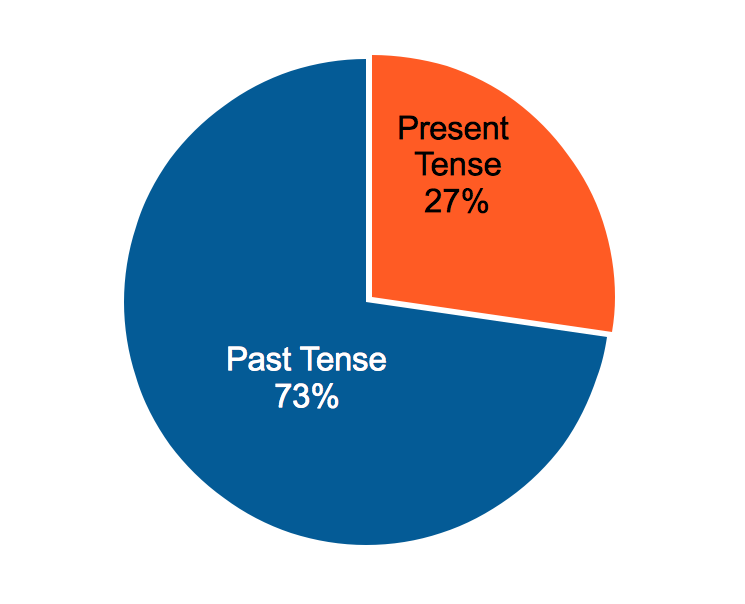
Of the 22 books on the list, 16 were in past tense and 6 were in present. While past tense remains more popular, present tense is clearly acceptable in middle grade fiction.
Present vs Past Tense in Realistic Fiction
Present tense was slightly more common in realistic fiction than in fantastical fiction. Out of 10 books, 3 were in present tense.
Present vs. Past Tense in Fantastical Fiction
Present tense was slightly less common in fantastical fiction than in realistic fiction. Out of 12 books, 3 were in present tense.
Third vs. First Person Point of View
First person point of view has been becoming increasingly popular. It turns out that first person point of view has actually surpassed third person point of view among bestselling middle grade novels.
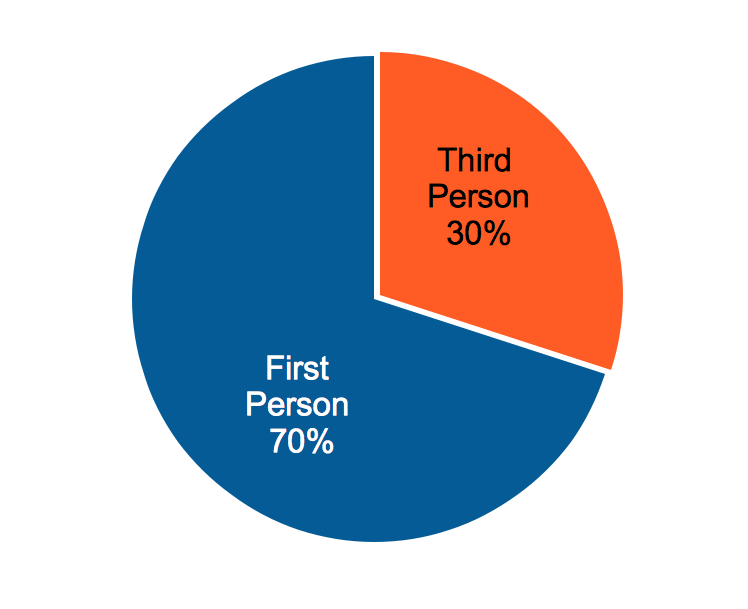
Out of 22 books, 12 were in first person and 10 were in third.
First Person vs. Third Person in Realistic Fiction
This is where the statistics get really interesting. First Person is far more popular in realistic fiction.
Out of 10 books, 7 were in first person and only 3 were in third.
First Person vs. Third Person in Fantastical Fiction
In fantastical fiction (fantasy, paranormal, etc.), third person was slightly more common.
Out of 12 books, 7 were in third person and 5 were in first person.
Conclusion
Realistic fiction is both more likely to be in present tense and more likely to be in first person, while fantastical fiction is more likely to stick to the traditional third person past tense.
However, no clear conclusions can be drawn from this data since we don’t know whether there is more first person and present tense in realistic fiction simply because more writers choose to write it this way (rather than that it is preferred by agents, editors, or readers).
My primary conclusion from this data is that anything goes. If you want to write a present tense, first person middle grade novel, it certainly doesn’t seem to be an inherently tough sell.
If you liked this post, please share it using the buttons below, follow my blog, or check back for the rest of the series.
First Page Friday is a new section on The Writeditor’s blog. Every Friday I will provide an in-depth edit and critique of the first 500 words of an unpublished novel.
I am still working on the best way to present the edit and critique so your feedback is welcome. Please let me know which sections you like, which you hate, and if you have any ideas for ways to make this segment more useful.
First Page Friday Edit & Critique
Critique Key
Original Text is in italics.
Red is text I recommend removing.
Green is text I recommend adding.
Blue are my comments.
Historical Fiction First 500 – By Maria Reeves
Maria informed me that this is an early draft, so I’m going to try to focus more on the big picture.
Strait of Juan De Fuca
July 17, 1897
It was amazing, Beriah thought, that the moon could be so yellow. She looked like a celestial gold nugget, << At first I thought the “she” was Beriah. hanging heavy and low in the night sky. << Starting with weather, the night sky, the moon, etc. is considered cliche and is likely to turn off agents and editors. It didn’t matter that she was waning; her beauty spoke for itself. Every night she issued a gentle reminder to humanity to strive beyond our limitations, to reach outside our capabilities, to explore the unknown. She belonged to everyone and no one, but tonight, Beriah knew she existed only for him << This threw me off because I expected Beriah to be a woman. It sounds like a feminine name to me. , and together they were going to issue a challenge to humanity that would be remembered for all time. << This paragraph is pretty generic. It doesn’t tell me anything about your character or the story other than that it’s nighttime.
Of course, much of that was dependent on human error, specifically Beriah’s human error, but he tried not to think about << Again, this isn’t telling me anything. The success of almost anything and everything is dependent on a lack of human error. that as he stood on the deck of the Sea Lion, a tiny tugboat, that was charging up the Straight of Juan De Fuca like a lonely ghost ship in the middle of the night. Beriah stood tall despite his nerves and checked his gold pocket watch for what must have been the thousandth time since he’d boarded the Sea Lion earlier that evening. <<Readers can infer that it’s been over the course of this evening. This slows down the paragraph. The watch had been a gift from his father, also a Beriah Brown, as well as a former Post Intelligencer editor and, one time Mayor of Seattle. << Does this matter for some reason? It seems a bit irrelevant.
This opening section has no apparent conflict and not enough information to grab my attention. If I picked this up at the book store, I wouldn’t keep reading.
2:14 AM.
Beriah felt the Captain’s eyes on him and tucked his watch back into his breast pocket. He’d made promises, perhaps too big for a lowly reporter to fulfill if he was wrong about tonight. << You’re still being vague. What promises? What is he trying to accomplish? What’s going on? He cleared his throat and clutched a sealskin bag firmly, in spite of the strap that was cinched tightly across his shoulder. He couldn’t think about what would happen to him if he were wrong. << He might not want to think about it, but as the reader, I want to know. What will happen if he’s wrong? And wrong about what? He felt himself reach for his watch again. Surely the moon, his cohort, was deceiving him.
There is still no conflict, only hints at one. My attention still hasn’t been grabbed.
2:14 AM.
He heard the steamship before he could see her. The Portland was storming towards them up the strait. She sounded old and tired, laboring as if her contents were trying to pull her under. If Beriah was right, they were. She materialized from the shadows. << It’s repetitive to say that she materialized after you said that she was storming towards them, which implies that Beriah could already see the ship. So you’ve mentioned Beriah seeing the ship a total of three times in four sentences. This creates a feeling in the reader of jumping forward and backward in time: he’s seen the ship, then he sees it coming up the straight, then it materializes (implying he hasn’t seen it yet). This jars the reader out of the story. There was something beautiful about her stubborn nature. She was defiant and unrelenting, meticulously trying to outrun a fate that would drag her to the depths of oblivion if she showed any sign of weakness. << What “fate” are you referring to? Share more with the reader. Beriah counted on the moon, hoping she would reveal the Sea Lion to the Portland before it was too late, before they would collide, sending the Sea Lion to her doom while the Portland charged ahead. << This should be an exciting concept, but it’s not hitting my emotions. Mostly because I know nothing about Beriah or the ship. I have no reason to care what happens next.
Beriah nodded at the Captain and felt their speed increase. This was his moment to make something of himself separate from his father and family name. << Why does he want to make something of himself? I don’t have enough information to understand why this is important. He felt like he could taste his heart as they charged the steamship head-on, in a desperate play to intercept the Portland before she made port in Seattle. << I thought the ships were going to collide? Now they’re intercepting her on purpose? So he wants the ships to collide? It’s not clear. They would succeed, or they would die. Either way, he took comfort that the moon would bear witness. << I don’t understand Beriah’s preoccupation with the moon.
The Writeditor’s Feedback
My Overall Thoughts
The writing style is pleasant in that the structure is simple, flows nicely, and is easy to understand. But I don’t know what’s going on. Not because I don’t understand what’s on the page, but because there isn’t enough there. I know that Beriah is on a ship, has a preoccupation with the moon, and wants to intercept another ship for some reason, but I don’t really know anything about the main character or his motivations.
My emotions are not engaged.
Key Places to Improve
There’s a difference between raising intriguing questions and being so vague that there’s nothing for the reader to latch onto. Unfortunately, this leans strongly towards the latter for me. The vague statements feel like you’re withholding information to try to create tension. Tell the reader what’s going on or they’re not going to stick around.
The timestamps seemed odd to me. Is there a very good reason for their inclusion? If not, I would get rid of them. They cut up what little action there is, and I think they’re encouraging you to be vague and repetitive by including short sections that aren’t really needed.
Watch out for filtering (heard, felt, saw, etc.). This is probably a pervasive problem in your writing, but it’s one that can be easily fixed.
Give us more of your character. Not back story necessarily, but something that shows the reader who he is. In the first few pages (as soon as possible), you want to establish: what the main character wants, why the reader should be sympathetic, and how the main character is being proactive. None of these things are clear other than that the main character doesn’t want the ships to collide.
The Writeditor’s Grade: 1
I’m not sure what this novel is about so I’m not sure whether you’re starting in the right place. If this is the best place to start, make it exciting, create tension, make us feel the character’s worry. Avoid long descriptions of the sky and moon. Avoid vague statements and thoughts. Be specific. Make it feel real.
I am giving this a one, not because the writing is terrible, but because this doesn’t do what a first page needs to do: suck the reader into the story.
My Grading Scale:
1 – Wouldn’t have finished the first page if I wasn’t editing. Back to the drawing board.
2 – Read the whole thing, but couldn’t look past problems with the writing to enjoy the story.
3 – Read the whole thing, was entertained at times, but I probably wouldn’t read on.
4 – Read the whole thing and liked it. Wasn’t really “wowed” but I would read on.
5 – Read the whole thing and loved it. I’m excited to read the rest of the book!
A note on the grading scale: The rating of the first chapter does not indicate the rating of the novel as a whole nor does it indicate the writer’s overall ability.
Reader Participation
What Do You Think?
Grades are subjective. The more people grading her work, the better grasp the writer will have on how much she needs to improve. Please help Maria by providing your own grade.
Your thoughtful critiques and suggestions for the writer are welcome in the comments section below. Explaining your grade gives Maria even more insight.
If you’d like to submit your novel for First Page Friday, please send the following to ellenbrock@keytopservices.com:
The name you want me to use in the blog post (real name, alias, or anonymous).
The genre of your novel.
The first 500 words (give or take, don’t stop in the middle of a sentence) pasted into the body of the email.
Any links (Twitter, Blog, Goodreads, etc.) that you’d like included in the post (not required).
Please do not submit if you are not okay with your first page being posted, critiqued, and edited on my website.
About the Editor
Ellen Brock (AKA The Writeditor) is a freelance novel editor who works with self-publishing and traditionally publishing authors as well as e-publishers and small presses. She owns the editing company Keytop Services and the writing and editing blog The Writeditor. When not editing, she enjoys reading, writing, and geocaching. Check out her editing services and testimonials.
Help First Page Friday be a Success! Please use the buttons below to share this post. The more views, the more submissions, the more First Page Fridays!










 Ellen Brock